|
|
|
|

|
|
|

|
© CSN Lab
|
|
|
Ausstellung im D21 Kunstraum.
Eröffnung am 19.03.2026, 19 Uhr
|
Das Cultural and Social Narratives Laboratory (CSN Lab) ist eine interdisziplinäre Plattform, die von einer Gruppe unabhängiger Forscher:innen, Wissenschaftler:innen, Kulturschaffender und Künstler:innen gegründet wurde. Ziel der Initiative ist es, zentrale Fragen und Herausforderungen der gegenwärtigen sozialen und kulturellen Entwicklungen sichtbar zu machen, die eine wichtige Rolle für die Entstehung und Stärkung der Zivilgesellschaft in Armenien und im Südkaukasus insgesamt spielen.
|
Der Blue Yerevan Pavilion ist eine Multimedia-Installation, die sich mit den Narrativen des Wassers der Stadt Jerewan und den Erinnerungen an ihre Gewässer befasst. Die Ausstellung wurde von der armenischen Kulturinstitution CSN Lab im Rahmen ihrer langfristigen transdisziplinären Forschung entwickelt und vereint Literatur, Architektur, Urbanismus, bildende Kunst, Archivmaterialien und ökologische Reflexionen, um Narrative zu dekolonisieren und alternative Bilder der Stadt zu zeigen.
|
Die Besucher sind eingeladen, Jerewan durch seine verborgenen Flüsse, verlorenen Landschaften und vielschichtigen Erinnerungen zu entdecken. Der Pavillon basiert auf dem Buch „Getar: Memory of a River“ von CSN Lab über den überdachten und kanalisierten Fluss Jerewans und erweitert sich zu einer umfassenderen Reflexion, die literarische Erzählungen, Archivkarten und -fotografien, Multimedia-Projekte und künstlerische Interventionen miteinander verbindet. Archivfotos und -karten zeichnen die Transformation der städtischen Umgebung vom Beginn der Sowjetzeit bis zum Zusammenbruch der Union und den anschließenden Entwicklungen im unabhängigen Armenien nach, während zeitgenössische Kunstwerke und hydro-feministische Perspektiven untersuchen, wie Wasser, Körper, Geschlecht und Fürsorge in der Stadtlandschaft zusammenwirken. Ein Multimedia-Bereich über eines der ältesten Viertel Jerewans untersucht dessen volkstümliche Netzwerkarchitektur und das von der natürlichen Landschaft geprägte Gemeinschaftsleben.
|
Als Forschungsarchiv und Ort des öffentlichen Dialogs lädt der Blue Yerevan Pavilion dazu ein, über Wasser als Ort kultureller und sozialer Erinnerung, ökologisches Erbe und als Perspektive für eine nachhaltigere und integrativere Zukunft der Städte nachzudenken.
|
|
|
|
Termine / Öffnungszeiten Blue Yerevan Pavilion
|
- Donnerstag, 19.03., 19 Uhr Eröffnung
- Freitag, 20.03., 15–19 Uhr
- Samstag, 21.03., 15–19 Uhr, 17 Uhr: Lesung „WHAT LEAVES & WHAT LIVES“
- Sonntag, 22.03., 15–19 Uhr
- Samstag, 28.03., 15–19 Uhr
- Sonntag, 29.03. 15–19 Uhr
|
|
|
|
© CSN Lab
|
|
Zwei Buchprojekte von Armenien nach Deutschland
|
Samstag, 21.03.2026, 17 Uhr
|
WAS BLEIBT & WAS VERSCHWINDET
Die vielfältigen Vergangenheiten einer armenischen Schule in Istanbul
|
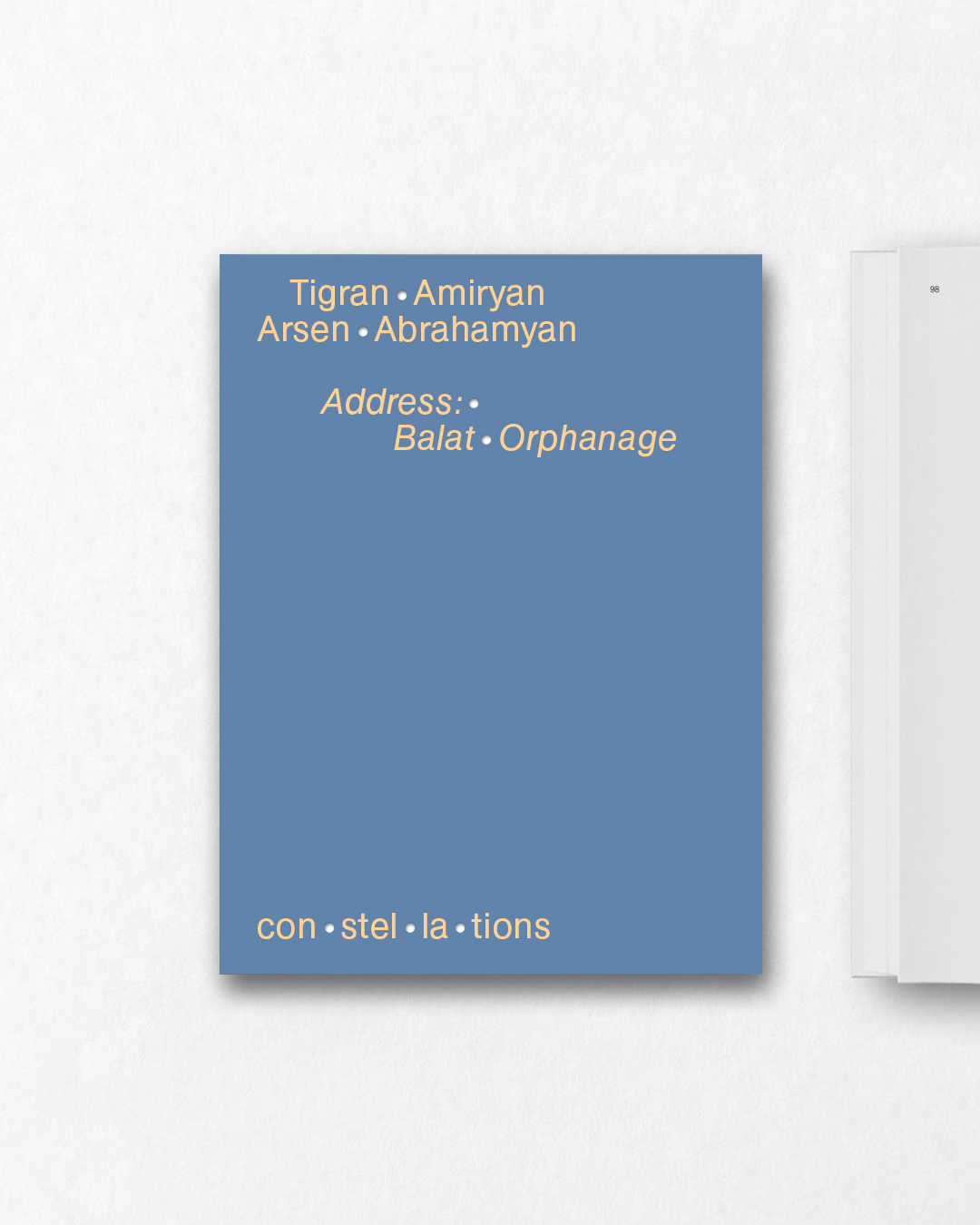
Das CSN Lab und der D21 Kunstraum Leipzig laden herzlich zur Buchpräsentation und zum öffentlichen Gespräch von Address: Balat Orphanage im Rahmen der Leipziger Buchmesse ein.
|
Die Veranstaltung stellt eine Zusammenarbeit zwischen dem CSN Lab und dem Exzellenzcluster „Temporal Communities“ an der Freien Universität Berlin vor. Aus dieser Kooperation sind zwei Bände hervorgegangen – Address: Balat Orphanage und Berlin Dialogues. Beide Publikationen verbinden Archivforschung und Literatur, um die komplexen Zusammenhänge von Krieg, Konflikt und Grenzen aus den Perspektiven von Erinnerung, Migration und Räumlichkeit zu untersuchen.
|
Im Rahmen der Veranstaltung findet ein Gespräch mit den Autoren Tigran Amiryan und Arsen Abrahamyan (CSN Lab) statt. Moderiert wird das Gespräch von der Mitherausgeberin Barbara Bausch (Freie Universität Berlin).
|
Address: Balat Orphanage ist aus der langjährigen Forschung des CSN Lab zu den Archiven der armenischen Khorenyan-Schule im Istanbuler Stadtteil Balat hervorgegangen. Die Archive wurden von der Hrant-Dink-Stiftung und der Balat-Stiftung digitalisiert und katalogisiert und bilden die Grundlage für eine interdisziplinäre Studie, die Archivarbeit, Erinnerungsforschung und räumliche Analyse miteinander verbindet. Das Buch zeichnet nahezu zwei Jahrhunderte der Transformation der Khorenyan-Schule und des Waisenhauses nach – eines Ortes der Fürsorge, der eine zentrale Rolle in der armenischen Gemeinschaft Istanbuls spielte und Ende der 1970er Jahre geschlossen wurde.
|
|
Die Archive reichen von der späten osmanischen Zeit bis in die frühe Türkische Republik und machen die verwobenen Geschichten armenischer, jüdischer und griechischer Gemeinschaften sichtbar. Sie dokumentieren politische und gesellschaftliche Veränderungen, die gemeinsame städtische Räume und kollektive Erinnerung geprägt haben.
|
Indem die Publikation die miteinander verflochtenen Prozesse von Erinnern und Vergessen untersucht, eröffnet sie Einblicke in ein umfangreiches, bisher unveröffentlichtes Archivmaterial, das das Leben vor, während und nach dem Armenischen Genozid dokumentiert.
|
|
Die Veröffentlichung ist Teil der Reihe con·stel·la·tions, einem Projekt des gleichnamigen Hubs für vernetzte und transdisziplinäre Initiativen. Dieser wurde im Rahmen des Exzellenzclusters 2020 „Temporal Communities: Doing Literature in a Global Perspective“ an der Freien Universität Berlin konzipiert.
|
|
|
|
|
© CSN Lab
|
|
|
|
|
Exhibtion at D21 Kunstraum.
Opening: 19.03.2026, 7pm
|
Cultural and Social Narratives laboratory (CSN Lab) is a multifarious platform created by a group of independent researchers, scientists, cultural workers and artists aiming to reveal the issues of contemporary social and cultural dimensions, which have an important role in the formation of civil societies in Armenia and South Caucasus in general.
|
On the occasion of the Yerevan–Leipzig Cultural Year 2025/2026, the CSN Lab is a guest at D21 Kunstraum with the Blue Yerevan Pavilion.
|
|
The Blue Yerevan Pavilion is a multimedia installation that explores the hydro-narratives of Yerevan city and the memories surrounding its water bodies. Developed by the Armenian cultural institution CSN Lab as part of its long-term transdisciplinary research, the exhibition brings together literature, architecture, urbanism, visual art, archival materials and ecological reflections to decolonise narratives and reveal alternative images of the city.
|
Visitors are invited to discover Yerevan through its hidden rivers, lost landscapes, and richly layered memories. The Pavilion evolves around CSN Lab’s Getar: Memory of a River book on Yerevan’s covered and canalised stream, and expands into a broader reflection that bridges literary narratives, archival maps and photographs, multimedia projects and artistic interventions. Archival photographs and maps trace the transformation of the urban environment from the start of the Soviet era to the collapse of the Union and subsequent developments in independent Armenia, while contemporary artworks and hydro-feminist perspectives explore how water, bodies, gender, and care intersect in the city’s landscape. A multimedia section on one of Yerevan’s oldest neighbourhoods examines its vernacular networking architecture and community life shaped by the natural landscape.
|
As both a research archive and a space for public dialogue, the Blue Yerevan Pavilion invites people to reflect on water as a site of cultural and social memory, ecological heritage, and a lens for imagining more sustainable and inclusive urban futures.
|
|
|
|
Programme / Opening Hours Blue Yerevan Pavilion
|
- Thursday, 19.03., 7pm: OPENING
- Friday, 20.03., 3–7pm
- Saturday, 21.03., 3–7pm, 17 Uhr: Lesung „WHAT LEAVES & WHAT LIVES“
- Sunday, 22.03., 3–7pm
- Saturday, 28.03., 3–7pm
- Sunday, 29.03. 3–7pm
|
|
|
Book Presentation:
Saturday, 21.03.2026, 5pm
WHAT LEAVES & WHAT LIVES
|
Tracing the Multiple Pasts of an Armenian School in Istanbul
|
CSN Lab and D21 Kunstraum Leipzig warmly invite you to the book presentation and public talk of Address: Balat Orphanage as part of the Leipzig International Book Fair.
The event presents a collaboration between CSN Lab and the Cluster of Excellence Temporal Communities at Freie Universität Berlin, which led to the creation of two volumes, Address: Balat Orphanage and Berlin Dialogues, that bring together archival research and literature to explore the complexities of war, conflict and borders through the lenses of memory, migration and spatiality.
|
The event will feature a conversation with the authors, Tigran Amiryan and Arsen Abrahamyan (CSN Lab), moderated by co-editor Barbara Bausch (Freie Universität Berlin).
Address: Balat Orphanage emerges from CSN Lab's long-term research on the archives of the Armenian Khorenyan School in Istanbul's Balat district. The archives were digitised and categorised by the Hrant Dink Foundation and the Balat Foundation, forming the basis for an interdisciplinary study that combines archival investigation, memory studies and spatial analysis. The book traces nearly two centuries of transformations of the Khorenyan School and Orphanage, a place of care that played a pivotal role in Istanbul's Armenian community and closed its doors in the late 1970s.
|
Spanning the late Ottoman Empire and early Turkish Republic, the archive reveals the intertwined histories of Armenian, Jewish, and Greek communities and documents the political and social shifts that shaped shared urban spaces and collective memory. By exploring the intertwined processes of forgetting and remembrance, the publication offers insight into a rich body of previously unpublished archival material documenting life before, during and after the Armenian Genocide.
|
The publication is part of the con·stel·la·tions series, a project of the eponymous hub for networked and transdisciplinary initiatives conceived within the framework of the Cluster of Excellence 2020 "Temporal Communities: Doing Literature in a Global Perspective" at Freie Universität Berlin.
|
|

|
© CSN Lab
|
|
|
The Blue Yerevan exhibition is organised by the Cultural and Social Narratives Laboratory (CSN Lab) in collaboration with D21 Kunstraum, Leipzig. The projects presented in the exhibition are supported by the Heinrich Böll Foundation (Yerevan Office), the Canadian Fund for Local Initiatives (CFLI), Goethe-Institut Armenia and Women’s Fund Armenia. Additional support is provided by the Yerevan History Museum, the National Archive of Armenia and the HinYerevan digital archive.
|
|
|
|
gefördert durch / funded by:
|
|
|

|

|
|
|
|
|
|
D21 Kunstraum | Demmeringstraße 21 | 04177 Leipzig | office@d21-leipzig.de
|
|
 
|
|
|
|
|
|
|
|